PCI DSS Explained: Requirements, Levels, and Business Impact
Understand PCI DSS rules, merchant levels, security duties, and compliance risks.

What PCI DSS Means for Card Payments
PCI DSS is a set of security rules for firms that handle payment card data. It protects cardholder data during storage, processing, and transmission.
The name means Payment Card Industry Data Security Standard. It applies across the PCI DSS payment card industry, including merchants, payment gateways, banks, and service providers.
PCI DSS does not replace local privacy laws or breach rules. It adds a shared security baseline for card payments. Every covered firm must protect its card data environment.
The PCI Security Standards Council manages the standard. The PCI Security Standards Council’s PCI DSS overview lists the current standard and its scope.
Who Must Follow the Standard?
Any entity that stores, processes, or sends cardholder data must meet PCI DSS rules. This duty applies regardless of company size or payment volume.
A small shop still has duties if it handles card data. A large online store has wider systems and greater testing needs. Both must secure the data they touch.
Covered groups can include these firms:
- Merchants that accept card payments
- Payment processors and payment gateways
- Acquirers, issuers, and card brands
- Call centers that take card details
- Cloud and hosting firms that support card systems
- Vendors that store or move cardholder data
Scope depends on how payment data moves through your business. A hosted checkout can reduce scope. It does not remove your duty to choose a safe provider and follow basic controls.
Ask your acquirer which forms and tests apply to your business. Card brands and banks may set added rules. Their rules can differ by region, card type, and transaction volume.
Merchant Levels and Their Assessment Duties
PCI DSS uses four merchant levels based on yearly card transaction volume. The levels help set the likely assessment path.

Level 1 covers merchants with more than six million card transactions each year. These merchants face the most demanding validation process.
Level 2 covers one million to six million transactions each year. Level 3 covers 20,000 to one million e-commerce transactions each year.
Level 4 covers fewer than 20,000 e-commerce transactions each year. It can also cover merchants with fewer than one million total card transactions.
| Level | Annual volume | Typical validation |
|---|---|---|
| Level 1 | Over 6 million transactions | Formal report and outside review may apply |
| Level 2 | 1 million to 6 million | Self-assessment or review set by the acquirer |
| Level 3 | 20,000 to 1 million online transactions | Self-assessment is often used |
| Level 4 | Under 20,000 online transactions | Basic validation may apply |
These thresholds are a useful guide, not a universal contract. Your acquirer or card brand may assign another level. A data breach can also trigger stricter checks.
Large firms may need an on-site review by a Qualified Security Assessor. Smaller firms often complete a Self-Assessment Questionnaire. They may also need an approved scan of public systems.
The Twelve Core Requirements
PCI DSS has twelve requirements grouped under six control goals. Together, they cover network safety, data care, access, testing, and security policy.
The standard is not just a checklist. Each control should match the risks in your card data environment. Good records also help prove that controls work.
- Build and maintain a secure network. Use firewalls and avoid vendor defaults.
- Protect stored cardholder data. Keep less data and secure what remains.
- Encrypt data across public networks. Use strong methods during transfer.
- Use anti-malware tools. Keep them active where threats can affect card systems.
- Develop secure systems. Fix flaws and test changes before release.
- Restrict access by business need. Give each user only needed access.
- Identify every user. Use unique accounts and strong sign-in checks.
- Limit physical access. Secure rooms, devices, paper, and backups.
- Track access and system events. Review logs for signs of misuse.
- Test security often. Run scans, tests, and checks on a set schedule.
- Set a security policy. Train staff and define clear duties.
- Manage risks through policy and review. Keep controls current as systems change.
Sensitive authentication data needs extra care. This data includes card codes and full track data. Do not keep it after approval unless a rule allows it.
A PCI DSS assessment should map each requirement to an owner and proof. Useful proof includes logs, scan results, staff records, and change reports.
How a PCI DSS Payment Gateway Helps
A PCI DSS compliant payment gateway can keep raw card details away from your main systems. It sends customers to a hosted payment page or uses secure token tools.
A token stands in for the card number during later payments. Your system stores the token instead of the raw number. This can shrink the systems inside your review scope.
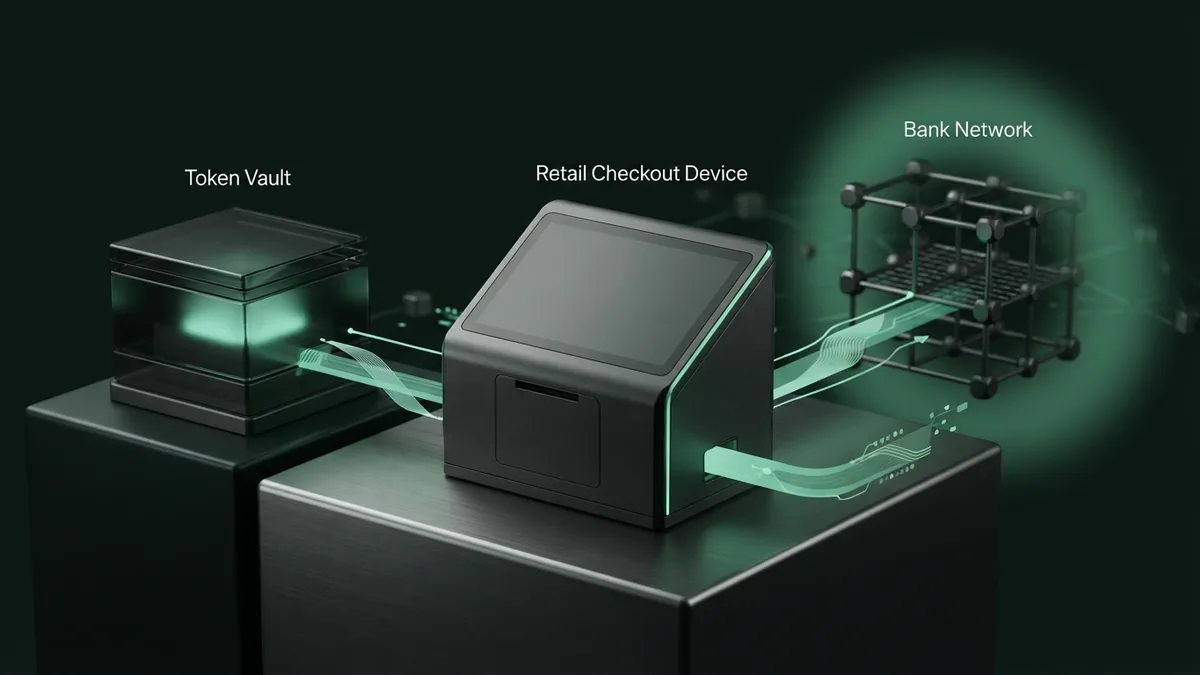
Scope reduction is helpful, but it is not automatic. Your team must set the gateway up in the right way. You must also protect your own accounts, devices, code, and staff.
When reviewing a PCI DSS payment solution, ask these direct questions:
- Does the provider publish its current PCI validation?
- Which services and systems does that validation cover?
- Does the checkout keep card data out of your server?
- How does the provider handle access, logs, and breach alerts?
- What duties stay with your business?
Do not treat a gateway badge as full compliance. A gateway can protect one payment path. Your business still owns its wider security duties.
Why Compliance Matters
PCI DSS compliance lowers the chance of a card data breach. It pushes firms to remove old data, limit access, and fix weak systems.
It can also build customer trust. Shoppers want safe payment choices and clear handling of their data. Strong controls support that trust through daily action.
Compliance can improve other security work too. Access reviews, patching, log checks, and staff training support wider risk management. These controls often align with other security standards.
The business gains can reach beyond security. A clear payment flow can reduce manual work. Better records can speed up audits and vendor checks.
Use a simple upkeep plan between formal reviews:
- List every place where card data enters, moves, or rests.
- Remove data stores that the business does not need.
- Assign one owner to each PCI DSS requirement.
- Review access after staff or system changes.
- Track fixes until each issue has proof of closure.
What Happens When a Business Falls Short?
Non-compliance can bring fees from banks, card brands, or payment partners. The exact amount depends on contracts, risk, and the breach facts.
A business may also face higher transaction costs. A bank can place added checks or reserves on its account. In severe cases, it can limit or end card acceptance.
A breach creates wider costs. These may include forensic work, customer notices, card replacement, refunds, and lost sales. Legal claims may follow if weak controls caused harm.
Failure can also damage trust with customers and business partners. Recovery takes time. A fast response plan helps limit the harm.
If an incident occurs, protect the affected systems first. Then contact your acquirer and response partners. Keep records of each action and follow the required notice rules.
Future PCI DSS Updates and New Risks
PCI DSS changes as attackers find new ways to steal card data. New versions can add stronger controls for passwords, software, monitoring, and risk reviews.
PCI DSS 4.0 brought more focus on tailored controls and targeted risk checks. It also placed more weight on regular testing. Firms should track updates from the Council rather than rely on old checklists.
Payment systems now use cloud tools, mobile devices, tokens, and outside vendors. Each change can alter the card data environment. Keep a current data flow map after every major system change.
Plan for updates with a small review cycle:
- Check the Council’s current version and transition dates.
- Ask vendors for new validation documents.
- Test access, scans, logs, and backup controls.
- Train staff when payment tools or duties change.
- Record risks that need a later fix.
The safest approach is steady upkeep. Treat PCI DSS as part of daily payment security. Do not wait for an annual form or audit.
Frequently asked questions
- What is PCI DSS in simple terms?
- PCI DSS is a security standard for firms that store, process, or transmit cardholder data. It sets twelve requirements across six control goals.
- Who needs to comply with PCI DSS?
- Any firm that stores, processes, or transmits cardholder data must comply. This includes small merchants, payment gateways, processors, and service providers.
- What are the four PCI DSS merchant levels?
- The four merchant levels depend on yearly card transaction volume. Level 1 exceeds six million transactions, while Level 4 covers the smallest merchants.
- Does a PCI DSS payment gateway make my business compliant?
- A PCI DSS compliant payment gateway can keep raw card data away from your systems. Your business still must secure its own accounts, devices, staff, and code.
- What happens if a business does not follow PCI DSS?
- Non-compliance can lead to fees, higher payment costs, legal claims, and loss of card acceptance. A breach can also cause major recovery costs.
- How often does PCI DSS change?
- PCI DSS updates address new threats and improve controls. Businesses should track new versions, test their systems, and update their payment security plan.
Related reading

Payment Networks — Who Moves Money and How
See how payment networks link customers, merchants, banks, and payment services.

Cancel Recurring Payments Before They Renew
Find each recurring charge, cancel it at the source, and check your statements.

Cryptocurrency Payment Gateways — How They Work
See how crypto gateways work, what they cost, and how to choose one for your business.